In education, digital transformation is often discussed as if it is a purely technical endeavour, yet the reality is far more human. The real challenge is not only choosing hardware or implementing cloud platforms, although selecting the right technology for your setting is absolutely critical; it is understanding how teaching staff, digital and IT teams, and senior leaders can work in true alignment. The strength of this alignment remains, in my view, the single greatest determinant of whether transformation accelerates or quietly collapses under its own complexity.
A Framework Designed for Clarity
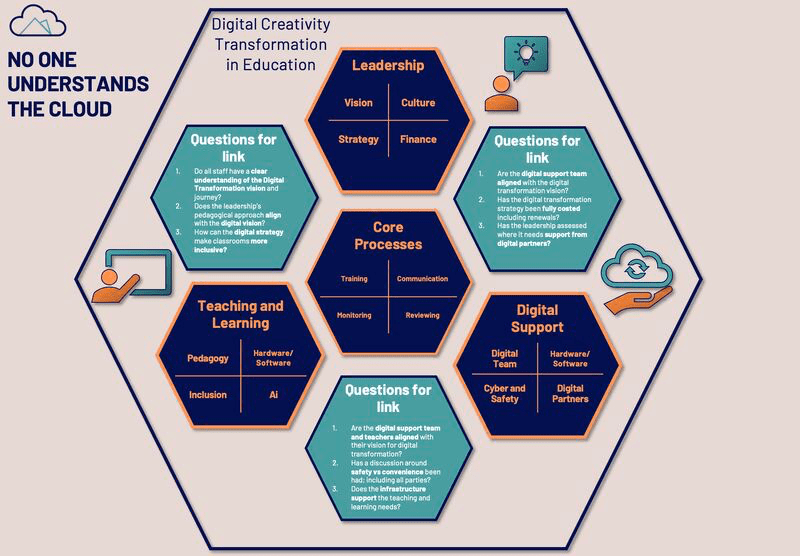
To help bring clarity to this space, I created a digital transformation framework that draws together the key elements which shape sustainable progress, including vision, culture, pedagogy, inclusion, AI, cyber security, digital teams, hardware and software, training, communication, and review. Recently, I have been focusing on the questions that sit between these elements, the questions that help us understand how people, processes, and purpose are genuinely connected rather than simply coexisting.Transformation as a Cultural Evolution.
Transformation as a Cultural Evolution
Digital transformation in education is not a technology project; it is a cultural and strategic evolution. It requires thoughtful leadership, shared understanding, and honest reflection on the conditions we create for staff and learners. I am increasingly interested in the sector wide conversation around these themes, particularly how we can better bridge the spaces between teaching, technology, and leadership to support meaningful and inclusive progress.
As part of that conversation, I would love to hear from colleagues across education.
What challenges are you facing in aligning your digital, pedagogical, and strategic ambitions?
What questions do you feel we should be asking more often?
Where do you see the greatest opportunities for stronger connections between people, technology, and leadership?

 Alex Handy
Leave a comment